
The Patch Test is a reliable allergen patch skin test designed to help your doctor determine whether or not you are allergic to any substances included on the test panel.It is a unique, direct “in vivo” test independent of any laboratory procedure. High reliability is achieved through use of highly purified, standard test substances.Chemotechnique Diagnostics offers the widest range of commercially available allergens for patch testing covering more than 350 different allergens.
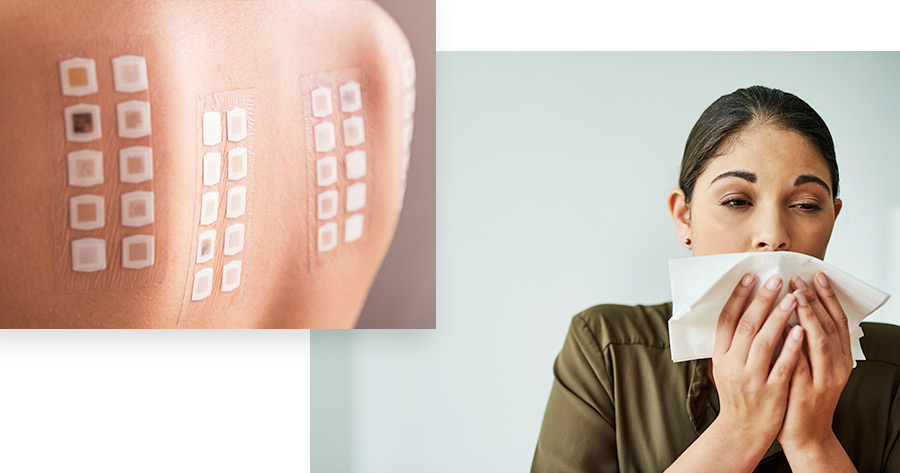
Your doctor will ask you to return after the panels have been on your back for a minimum of 48 hours.
Just a few: When bathing or showering, you must be careful not to get the test panel or surrounding area wet. If the test panel does become wet, it may loosen, allowing the test substances or marking ink to be washed away.For the same reason, any activity that may cause you to sweat or cause the test panel to loosen, such as sun bathing or exercising, should also be avoided.If for any reason an area of the test panel does become loose, you should immediately reattach it with a hypoallergenic adhesive tape.
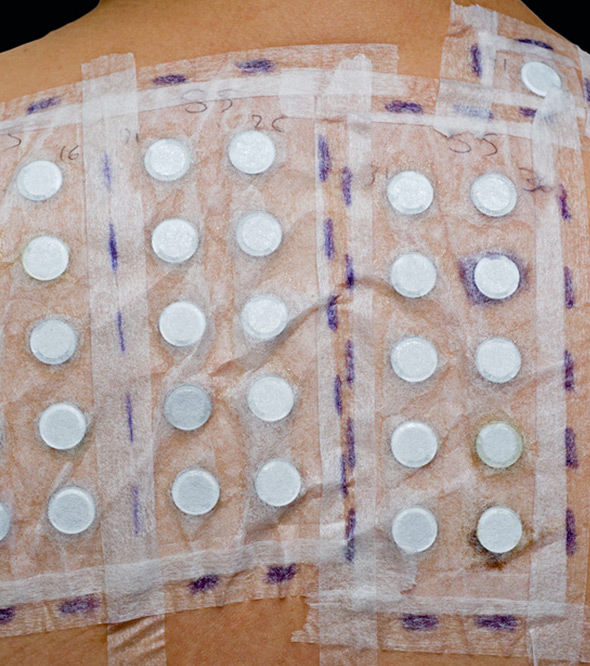
The date and time of your next visit will be given to you during your visit. It is very important that you keep this appointment. Since a reaction to any of the test substances will continue to develop even after the panels are removed, your doctor will determine how long you should wait before your next appointment.
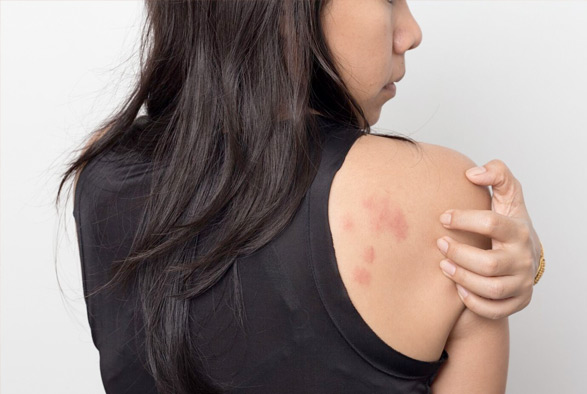
At each of your next appointments, your doctor will carefully examine the test area for signs of an allergic reaction. This reaction usually consists of rash with swelling, redness, and tiny blisters. Redness alone, however does not necessarily mean that you have had an allergic reaction.
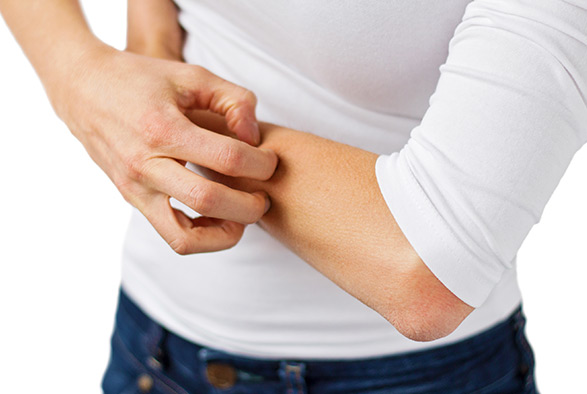
Itching and burning sensations are common with patch testing. If itching and burning sensations become severe, you should contact your doctor.Try not to scratch the test area. If you do, the skin may become irritated and itch even more. Skin that has become red and irritated by scratching will make it difficult by your physician to interpret the result of the test.
If you are allergic, your doctor will provide information on where in your everyday surroundings you are likely to come in contact with the substances to which you are allergic.Your doctor will also tell you how best to avoid these substances and possibly suggest alternatives to them.

The PATCH TEST is designed to identify the most common allergens that cause allergic contact dermatitis. A negative test result will minimize the need to restrict your use of products that contains these allergens.Furthermore, a negative result provides valuable information that will help your doctor diagnose your condition and initiate treatment.
| Benzocaine 5% pet | Ethyleneurea, meIamine formaldehyde 5% pet |
| 2-Mercaptobenzothiazole 1% pet | 2-tert-butvl-4-methoxyphenol 2% pet |
| Colophony 20% pet | Goldsodiumthiosulfate 0.5% pet |
| 4-paraphenylenediamine 1% pet | Ethyl acrylate 0.1% pet |
| Imidazolidinylurea 2% pet | Glyceryl thioglycolatete 1% pet |
| Cinnamic aldehyde 1% pet | Tosylsulfonamideformaldehyde resin 10% pet |
| Amerchol L 101 50% pet | Methyl methacrylate 2% pet |
| Carba Mix 3% pet | Cobalt chloride hexahydrate 1% pet |
| Neomycin sulfate 20% pet | Tixocortal-21-pivolate 1% pet |
| Thiuram Mix 1% pet | Budesonide 0.1% pet |
| Disperse Red 171% pet | Chloroxylenol 0.5% pet |
| Ethylenediamine dihydrocloride 1% pet | Triethanoamine 2% pet |
| Epoxy resin 1% pet | Cetyl/stearyl alcohol 5% pet |
| Quarternium-15 2% pet | Tea tree oil 5% pet |
| 4-tert-butylphenoIformaIdehyde resin 1% pet | Disperse Blue 124 1% pet |
| Mercapto mix 1% pet | Disperse Yellow 1 % pet |
| N-isopropyl-N-phenyl-4-phenyl 0.1% pet | Benzyl salicylate 2% pet |
| Potassium dichromate 0.25% pet | 4-Aminoazobenzene .25% pet |
| Balsam of Peru 25% | Isoeugenol 2% pet |
| Nickelsulfate hexahydrate 2.5% pet | Eugenol 2% pet |
| 2.5-Diazolidinylurea 1% pet | DMDM hydantoin 1% pet |
| Tocopherol pet | Ylang vlang oil 2% pet |
| Bacitracin 20% pet | Benzyl alcohol 1% pet |
| DiphenyIthiourea 1% pet | Isopropyl myristate 20% pet |
| Disperse Orange 1% pet | Triclosan 2% pet |
| Parabens mix 12% pet | Diphenylguanidine 1% pet |
| Euxyl K400 2.5% pet | Polysorbate 5% pet |
| Fragrance mix 8% pets | Dibutylthiourea 1 % |
| Glutaraldehyde 0.5% pet | I 2-N-octyl-4-isothiazolin 0.1% pet |
| 2-bromo-2-nitropropane 0.5% pet | I 2-N-octyl-4-isothiazolin 0.1% pet |
| Sesguiterpenelactone mix 0.1% pet | Benzalkonium chloride 0.1% aq |
| Thimerisal 0.1% pet | Cocamidopropyl betaine 1% aq |
| Disperse Red 1% pet | Formaldehyde 1% aq |
| 2hydroxy-4-methoxybenzophenone 3% pet | Kathon CC 0.1% aq |
| 2-chloro-3,5-xylenol 1% pet | Proplyene glycol 30% aq |
Receive skincare tips, news and special offers!
This will close in 0 seconds